When it comes to 3D printing, the sky is the limit. As 3D printing technology continues to advance, applications can be as far reaching as airplane and automobile parts to medical devices and even anatomically correct, biocompatible models. Although 3D printing technology is developing at a rapid pace, the technology itself is not new. It emerged in the 1980s as a means of creating rapid prototypes. In recent years the applications for 3D printed models have evolved with the available hardware, software, and printable materials. Evolving technology, paired with the creative and innovative minds of scientists, engineers, and physicians, has been the launching pad for developments within 3D printing technology specific to healthcare. One way 3D printing technology is poised to create better patient outcomes is in creating an anatomically and patient-specific models to aid in surgery and medical procedures. With the capability to 3D ...
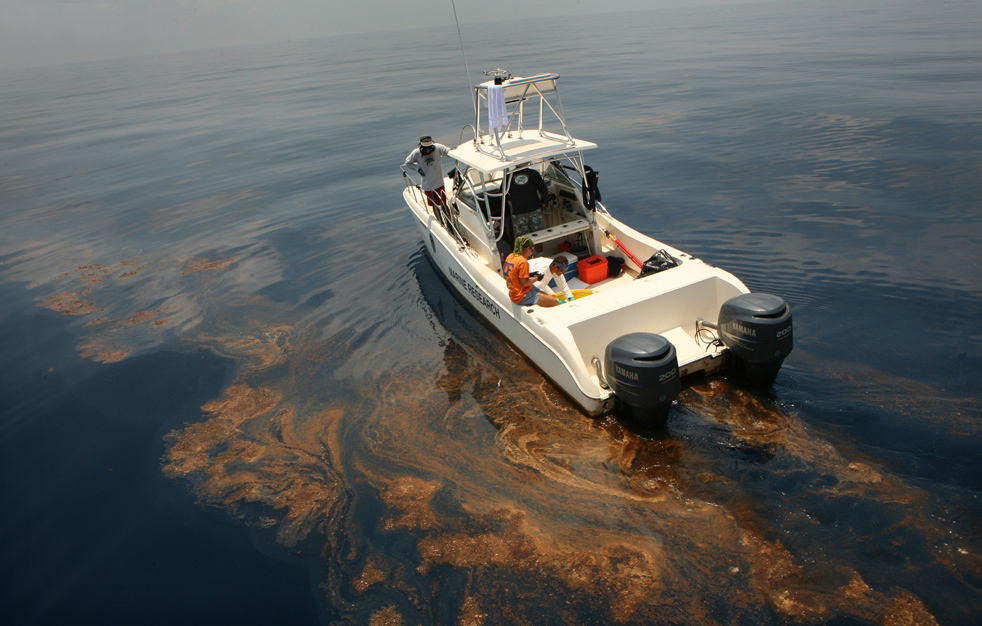
The EUREKA Euroenviron Biosorb-Tox project has developed a treatment system for oil-polluted wastewater that is changing the way it can be treated while dramatically cutting costs.
Wastewater from ships, oil refineries and other petrochemical industries is laden with harmful toxic compounds, which damage aquatic life, natural coastlines and human health. For this reason, the EU has strict regulations regarding treatment and discharge of such wastewater.
Traditionally, oil-contaminated wastewater has been treated in three stages. Only after the third and final stage is the water clean enough to be pumped back into the sea. This final stage is complex, expensive and can result in unanticipated problems – such as the growth of undesirable bacteria and the disposal of waste toxic sludge.
Kaunas University of Technology in Lithuania sought an alternative. “The cost of tertiary treatment is a big problem,” explains Professor Viktoras Racys, project coordinator. “You can treat oil-polluted water effectively, but it costs a lot. We set out to find a stable process which was as cheap as possible.”
The environmental engineering department had already developed and tested a new treatment model on a laboratory scale. "To apply our water treatment to large industrial practices, we needed external funding. EUREKA labelling helped in this by enabling us to apply for national funding in the countries concerned," he says.
Together with three partners from Sweden, the project team came up with an ultra-efficient combination on an industrial scale. "We developed the treatment using three processes in one piece of equipment – a reactor," he explains. "We use sorption, bio-degradation and filtration. The pollutants are degraded by micro-organisms created within the reactor."
The design, manufacture and installation of the reactor were carried out by Lithuanian wastewater specialists Dinaitas. The system has been installed at the Lithuanian oil company Nasta, and has performed exceptionally, processing 160 m3/hour. The costs are around €1 for every 3.5 litres treated – only a tenth that of similar commercial services.
Prior to treatment, the highly contaminated water has approximately 1 g of pollutant per litre. However, thanks to this process, that figure is reduced to only 0.1 g/l. The quality of the treated water is of such a high level that it can be put straight back into the sea without endangering flora and fauna.
In two years of daily operation, the system has proved stable and has shown the potential for use in sensitive environmental regions. The developers are now looking for wider industrial exploitation.
Comments
Post a Comment